
Welcome
If there is one thing I’ve learned as a studio owner, manager, and mentor to other fitness and wellness leaders, it’s this:
Most leadership challenges don’t come from bad intentions. They come from misalignment, unclear expectations, and uneven support.
Over the years, both in my own employment and in my work with boutique fitness owners and managers across the industry, I’ve noticed a pattern.
No matter the format, the city, or the size of the studio, the same instructor dynamics show up again and again.
Not because people are trying to cause issues.
But because leadership often isn’t taught alongside teaching.
This guide exists to give you language, perspective, and structure so you can lead your instructor team with clarity instead of frustration, confidence instead of guilt, and intention instead of burnout.
Inside, we’ll walk through the four most prevalent instructor archetypes you’ll encounter in a boutique studio environment and how to lead each one in a way that protects your culture, your business, and your well-being.
Why Instructor Leadership Matters
Your studio’s success is not built on equipment, trends, or branding alone.
It is built on people.
Your instructors carry your mission.
They shape your member experience.
They model your culture.
And how you lead them sets the emotional tone for your entire business.
This guide is not about labeling instructors.
It’s about understanding leadership needs.
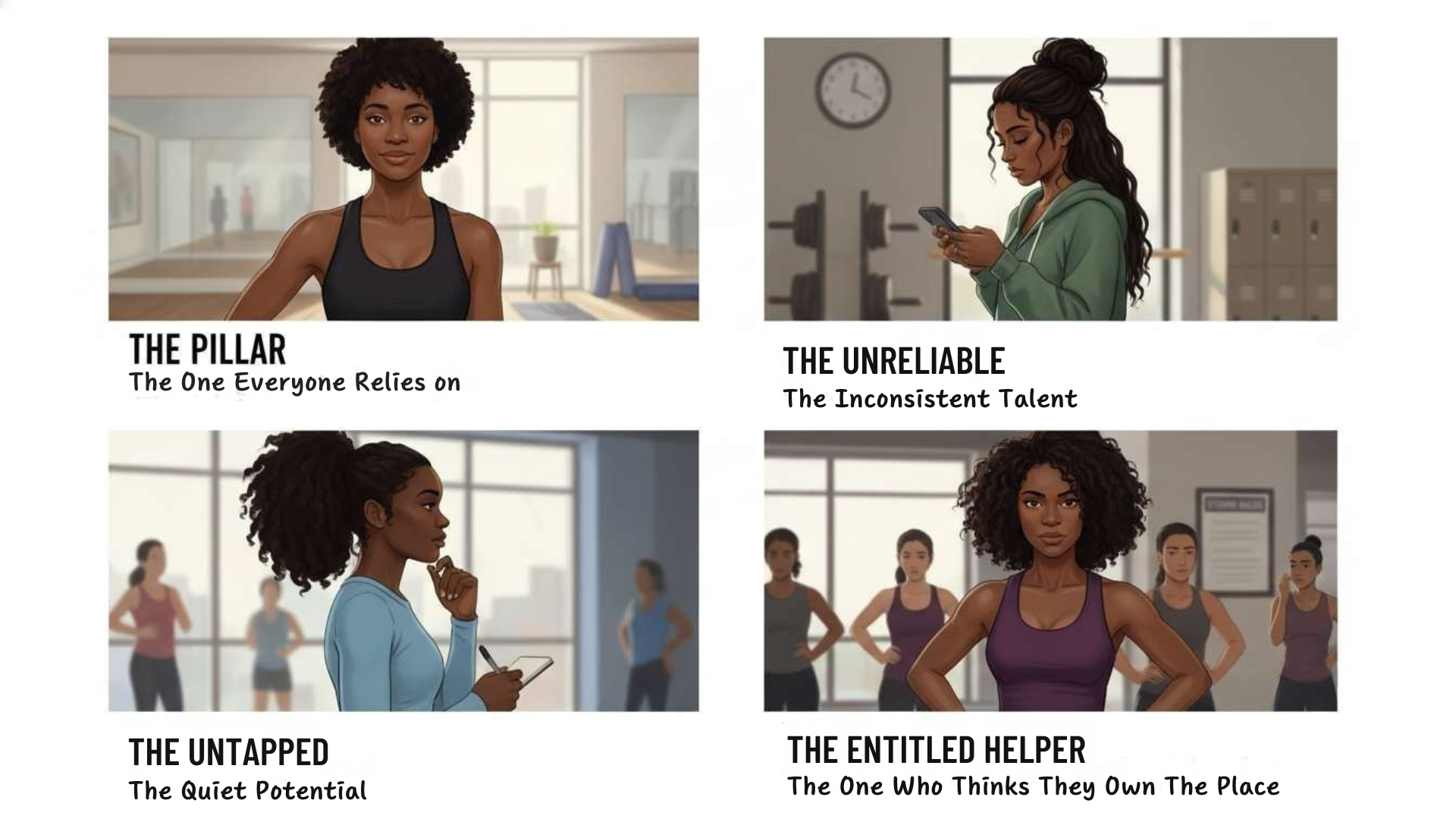
The Four Instructor Archetypes
THE PILLAR
The One Everyone Relies On
The Pillar is dependable, prepared, and trusted by members. They often feel like a stabilizing force in your studio.
They show up early.
They communicate clearly.
They handle feedback well.
They quietly support others.
The leadership risk
The Pillar is often overused.
Because they don’t complain, they become the solution to every gap, every emergency, and every scheduling issue. Over time, this creates quiet burnout and disengagement.
How to lead The Pillar
- Recognize their contributions intentionally
- Protect them from overextension
- Ask about their goals and growth
- Create leadership pathways without overburdening them
- Ensure they are not compensating for weak systems
Your role is not to extract more from them, but to retain and respect them.
THE UNRELIABLE
The Inconsistent Talent
The Unreliable instructor often has skill and potential but struggles with consistency.
They may cancel late, forget policies, or require repeated reminders. They are not malicious, but their inconsistency creates stress for the studio.
The leadership risk
Avoiding direct conversations in hopes things will improve.
This allows patterns to continue and shifts the burden onto managers and reliable instructors.
How to lead The Unreliable
- Set clear expectations in writing
- Name patterns, not excuses
- Create timelines for improvement
- Enforce consequences consistently
- Be willing to release if standards are not met
Reliability is not optional. It is foundational.
THE UNTAPPED
The Quiet Potential
The Untapped instructor shows up, follows policies, and does their job well, but often lacks visibility or confidence.
They may not advocate for themselves, but they hold significant growth potential.
The leadership risk
Assuming they are “fine” and never offering development.
Without mentorship, they remain stagnant or disengage quietly.
How to lead The Untapped
- Ask about their goals
- Offer training or shadowing opportunities
- Give specific, confidence-building feedback
- Invite leadership in small, supported ways
- Let them know they are seen and valued
When nurtured, The Untapped often becomes one of your strongest leaders.
THE ENTITLED HELPER
The One Who Thinks They Own the Place
This instructor often appears indispensable.
They jump in during emergencies.
They have a big personality.
They’ve been relied on repeatedly.
Over time, they begin to believe the rules don’t apply to them.
They resist feedback, blur boundaries, and undermine leadership, often under the guise of “helping.”
The leadership risk
Confusing availability with authority.
Allowing special privileges creates cultural instability and teaches others that boundaries are optional.
How to lead The Entitled Helper
- Re-establish clear roles and expectations
- Address behaviors directly, not personalities
- Remove informal authority
- Enforce policies consistently
- Be willing to tolerate short-term discomfort for long-term health
Helping in a bind does not grant ownership.
A Final Leadership Reminder
Leading instructors is not about control.
It’s about:
- Clarity
- Consistency
- Care
- Boundaries
When you lead intentionally, your studio becomes calmer, your team becomes stronger, and your leadership becomes sustainable.
You are allowed to build a studio that supports you too.
How to Use This Guide
- Reflect on where each instructor currently sits
- Identify what leadership adjustments are needed
- Pair this guide with written expectations and check-ins
- Revisit quarterly as your team evolves
Leadership is a practice.
You don’t have to get it perfect.
You just have to lead on purpose.


